SUL4R-PLUS Sustainability: The Carbon Footprint of Commonly Used Fertilizers

Travis Banet, PhD (Integrated Plant and Soil Sciences)
SUL4R-PLUS Manager of Research and Development

In 2025, SUL4R-PLUS partnered with Tunley Environmental to measure SUL4R-PLUS carbon footprint.

What is a carbon footprint?

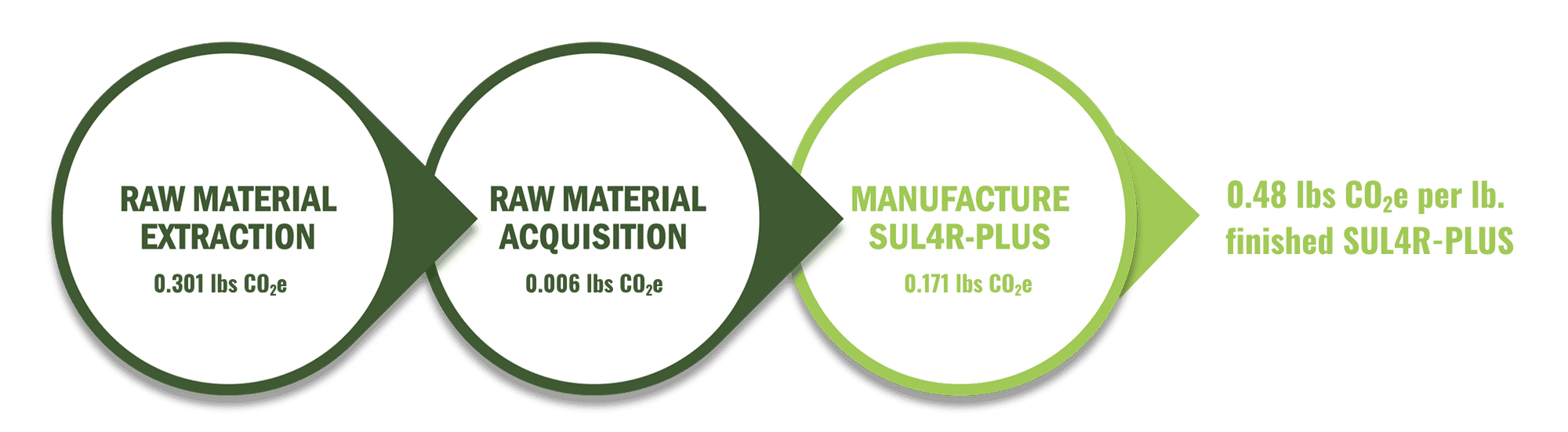
Greenhouse gas emissions are commonly created when fuel and energy are used to power things. For example, burning fossil fuels such as coal, natural gas, or gasoline to create heat, electricity, and fuel vehicles leads to greenhouse gas emissions. A carbon footprint describes the amount of greenhouse gases that are created when things are manufactured. A carbon footprint can generally be broken into three stages:

  • Raw Material Extraction: this includes all the greenhouse gases created to harvest ingredients from their sources.
  • Raw Material Acquisition: this includes all the greenhouse gases created during the transport of ingredients from their sources to the point of production.
  • Manufacturing: this includes all the greenhouse gases that are created during production.
What is SUL4R-PLUS carbon footprint and how does it compare to other fertilizers?

Compared to a dozen other commonly used fertilizers, SUL4R-PLUS has the third lowest carbon footprint (Figure 1). Of these, SUL4R-PLUS carbon footprint is 34% – 81% less than the ten fertilizers that have a greater carbon footprint.
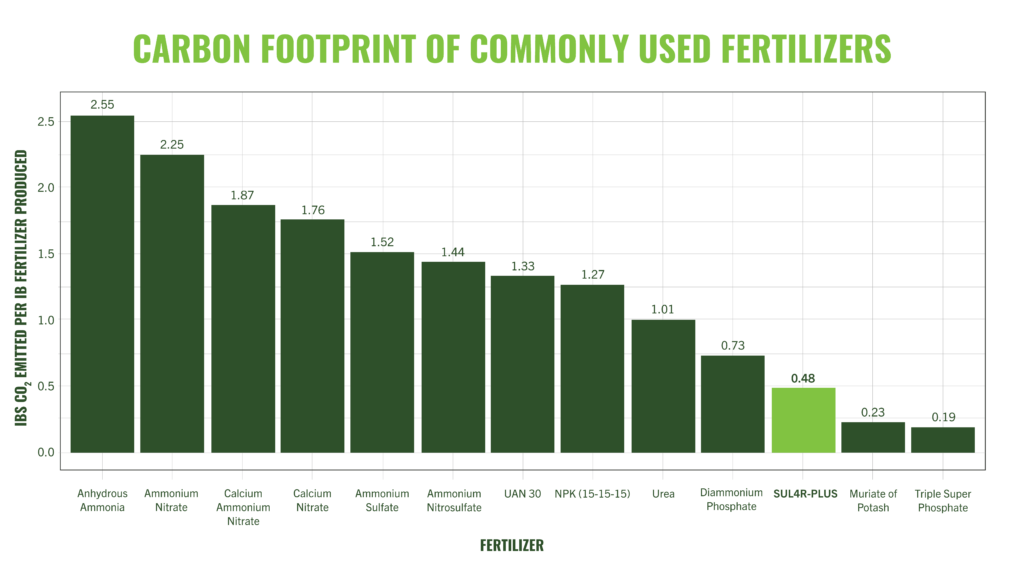
Figure 1: This figure demonstrates the cradle-to-gate carbon footprint of commonly used fertilizers as reported in published literature. Reported units were all converted to pounds of CO2 equivalents per pound of fertilizer produced. In cases where multiple sources reported the same fertilizer, values from the most recently published source were used. References to the data used in this figure are cited below in Table 1.

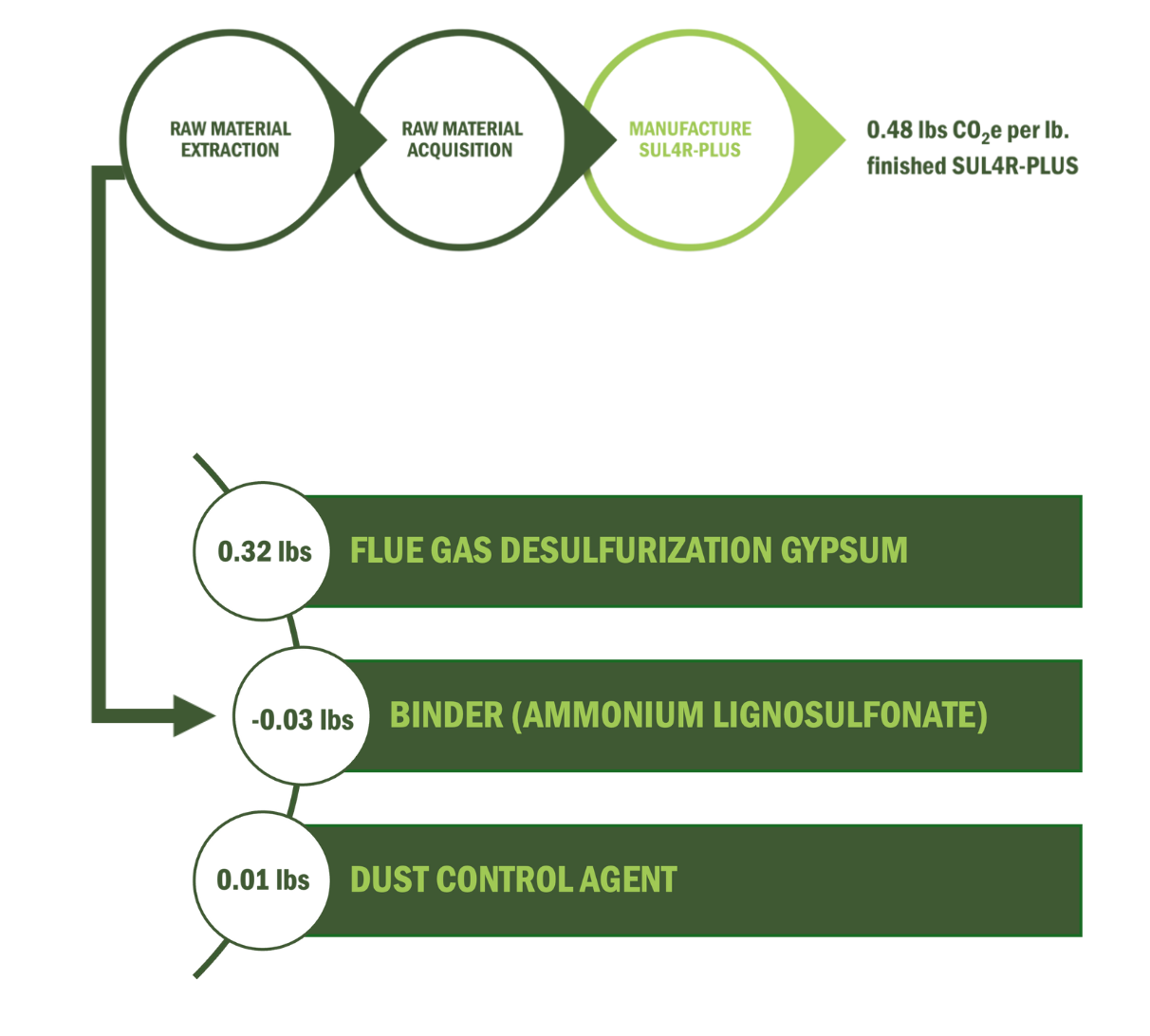
It’s also important to recognize that each fertilizer’s carbon footprint is unique because they each require different ingredients and processes to create the final product. For SUL4R-PLUS, more than 60% of its carbon footprint comes from creating its main ingredient: flue gas desulfurization gypsum.

Flue gas desulfurization gypsum, or FGD gypsum, is a waste product created when coal-fired power plants scrub sulfur-based gases from smokestacks. Per federal regulations, these sulfur-based gases must be scrubbed out of smokestack exhaust to prevent harmful environmental effects like acid rain. Even if SUL4R-PLUS was not on the market, the FGD gypsum would still be produced and would keep creating greenhouse gas emissions to keep the smokestacks free of sulfur oxide gases.

SUL4R-PLUS makes use of this waste product and turns it into a valuable plant-available nutrient source that can enhance crop growth and productivity. Learn more about our Research and the impact that SUL4R-PLUS can have on a variety of crop yields.
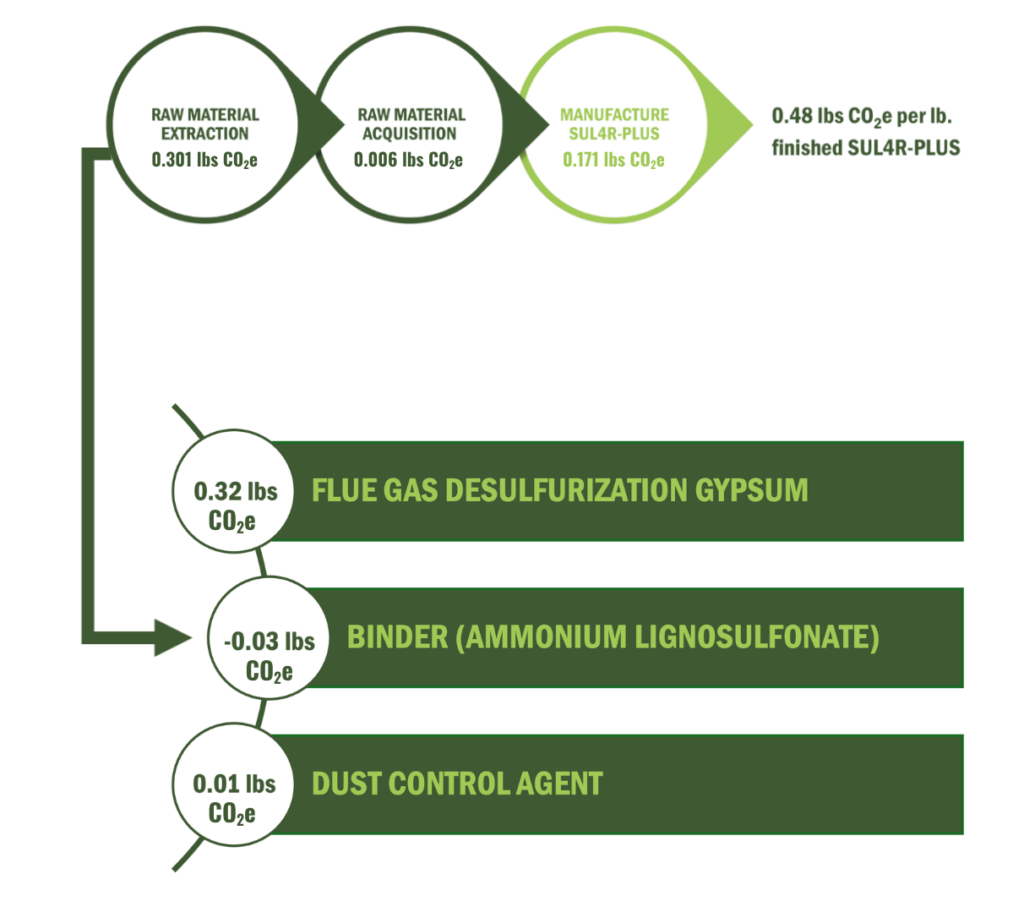
Table 1: Citations to the data referenced in Figure 1.

FertilizerCitationReference in Text
SUL4R-PLUSTunley Environmental, 2025Table 2, page 9
Ammonium Sulfate
Ammonium NitrateFertilizers Europe, 2018Table 6, page 13
Calcium Ammonium NitrateTable 8, page 15
UreaTable 10, page 17
UAN 30Table 12, page 19
Ammonium NitrosulfateBretrup and Hoxha, 2016Table 3, page 5
Calcium Nitrate
Diammonium Phosphate
NPK (15-15-15)
Triple Super Phosphate
Muriate of Potash
Anhydrous AmmoniaLiu et al., 2020Figure 4, page 7

Get expert insights, company news & trial data.

Here’s a few similar resources we think you may find interesting.
  • Trials Continue to Show Improved Yields by Adding SUL4R-PLUS

    The results are in from our 2022 corn field trials conducted in Western Kentucky! These trials demonstrated that SUL4R-PLUS can improve corn yields while also increasing nitrogen uptake efficiency and utilization by the crop. Let’s dig into the details.

    Read More

  • SUL4R-PLUS and HELM Crop Nutrition Americas Announce Exclusive Partnership

    We are thrilled to announce our exclusive partnership with HELM Crop Nutrition Americas, a leading name in agricultural logistics and distribution.

    Read More
  • Sulfate All Season Long

    The ultimate purpose of fertilizer is to provide essential nutrients to your crops. That’s why SUL4R-PLUS fertilizer is designed to make nutrients available to your crops when and where they are needed—not simply dump chemicals into the soil.

    Read More

SUL4R-PLUS® Sustainability: Carbon Footprint and Life Cycle Analysis

Travis Banet, PhD (Integrated Plant and Soil Sciences)
SUL4R-PLUS Manager of Research and Development

In 2025, SUL4R-PLUS partnered with Tunley Environmental to answer two questions:

  1. What is the carbon footprint of SUL4R-PLUS?
  2. What overall effect does using SUL4R-PLUS in the field have on greenhouse gas emissions?

What is a carbon footprint?

Every process requires some kind of energy source. Gas-powered vehicles get their energy from burning gasoline. Electric vehicles (most likely) get their energy from burning coal at a power plant, which transforms the combusted coal into electricity that is stored in the vehicle’s battery. Processes that consume energy commonly create greenhouse gases as a byproduct of the chemical reactions that power each process.

A carbon footprint describes the amount of greenhouse gases that are created when fuel and energy are used to power a process.

What makes up the carbon footprint of SUL4R-PLUS?

The SUL4R-PLUS carbon footprint can be divided into three phases:

What is the SUL4R-PLUS carbon footprint?

About 63% of the SUL4R-PLUS carbon footprint comes from raw material extraction. Raw material extraction for SUL4R-PLUS can be broken down into three items:

Creating Flue Gas Desulfurization (FGD) gypsum, a main ingredient in SUL4R-PLUS, is energy intensive and accounts for more than half of the SUL4R-PLUS carbon footprint. 

However, even if SUL4R-PLUS was not on the market, FGD gypsum would still be produced and contribute to CO2 emissions. FGD gypsum is a waste product created as coal-fired power plants scrub sulfur-based gases from smokestacks. Per federal regulations, these sulfur-based gases must be scrubbed out of smokestack exhausts to prevent harmful acid rain.

SUL4R-PLUS repurposes the FGD gypsum waste into a valuable product that can enhance plant growth and performance. Check out our research from the field to learn more about the impact that SUL4R-PLUS has on crop yields.

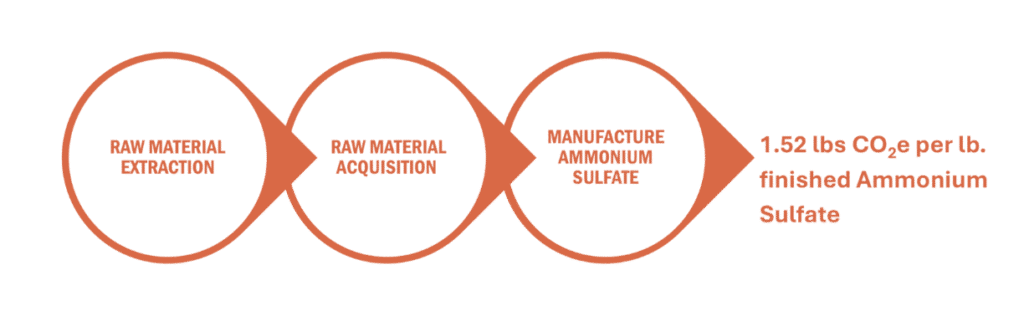
The SUL4R-PLUS carbon footprint is also 68% less than ammonium sulfate, a commodity fertilizer also used to supply plant-available sulfur.

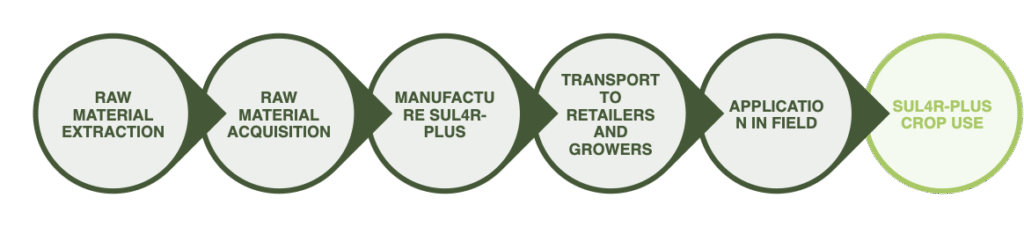
What is the complete life cycle of SUL4R-PLUS?

After production, SUL4R-PLUS is transported to retailers and growers, applied in the field, and then taken up by plants. 

Unlike previous steps in the product’s life cycle, using SUL4R-PLUS results in negative emissions. Negative emissions indicate that CO2 is being removed from the atmosphere rather than added to the atmosphere.

Net CO2 emissions = -82.6 lbs Co2e over one acre treated with 100 lbs of SUL4R-PLUS

Our Mill Creek Production Facility makes about 60,000 tons of SUL4R-PLUS each year.  At 100 lbs SUL4R-PLUS per acre, that’s enough to treat 1.2 million acres of cropland, and remove approximately 50,000 tons more CO2 than untreated croplands.   

For comparison, removing 50,000 tons of CO2 is approximately equal to removing the greenhouse gases created by:

  • Driving 11,000 powered passenger vehicles for one year
  • Consuming 5.4 million gallons of gasoline
  • Burning 53 million pounds of coal
  • Powering 6,400 homes for one year

To remove 50,000 tons of CO2, it would take:

  • 795,000 tree seedlings 10 years
  • 48,000 acres of U.S. forests one year

How does SUL4R-PLUS enhance CO2 removal?

Field trial data from 2016 to present has shown that SUL4R-PLUS can increase crop growth compared to untreated fields. More crop biomass in the field means that more photosynthesis is happening and drawing down increased levels of CO2 from the atmosphere to grow crop stems higher, larger leaves, and produce more grain, seed and fruits (figure for animation concept below).

For more details on the Carbon Footprint and Life Cycle analysis from Tunley Environmental, please see the full report.

Note: CO2e stands for “CO2 equivalents.” Not all greenhouse gases are equal, and some retain more heat than CO2. These gases have been accounted for and are standardized as CO2 equivalents, or CO2e. Units in this blog post have been converted into lbs of CO2e per lb of SUL4R-PLUS, whereas the full report displays the results in kg of CO2e per lb of SUL4R-PLUS. Approximations of CO2 emissions created by burning fossil fuels, powering homes, removed by tress, etc., were calculated using the U.S. EPA Greenhouse Gas Equivalencies Calculator.

Get expert insights, company news & trial data.

Here’s a few similar resources we think you may find interesting.

  • SUL4R-PLUS vs. AMS Fertilizer

    When compared to AMS fertilizers, SUL4R-PLUS is simply the smarter option. Our fertilizer is designed to deliver nutrients to crops when they need them most—plus it comes with cost saving benefits.

    Read More
  • The Top 3 Nutrients Missing from Your Soil Test

    Soil testing can be expensive, and if you’re not sure what kind of testing is most valuable to you, it’s tempting to just choose the most affordable option.

    Read More
  • Improve Soil Health & Crop Yields With Low Salt Fertilizer: See the Field Trial Results

    Fertilizer is an essential component of modern agriculture, providing the essential nutrients for plants to grow and thrive. However, not all fertilizers are created equal, and some can have negative impacts on soil and crop health. One factor that is often overlooked when selecting a fertilizer is its salt index, or the potential any fertilizer has to harm a crop. Excessive salt levels can lead to soil compaction, reduced water penetration, decreased plant growth, increase susceptibility to insects and disease, and reduced yields.

    Read More

Join a Growing SUL4R-PLUS Team

We’re excited to be adding to our team at our Mill Creek, Kentucky, and Marissa, Illinois, locations.

At SUL4R-PLUS, we take pride in turning the gypsum by-product from local coal power plants into a powerful solution for healthier soil and better farming. We’re passionate about making a real impact in agriculture while creating a workplace where our team feels valued and supported. If you’re looking for a rewarding career with a company that makes a difference, we’d love to hear from you!

All full-time SUL4R-PLUS team members can expect a competitive salary and benefit package, including medical and dental coverage, performance bonus opportunities and a 401k match.

Applicants will be subject to background checks and drug screening.

Positions we’re looking to fill include:

Marissa, IL

  • Shift Supervisor
  • Plant Operator
  • Front Loader/Operator
  • Utility Operator
  • Administrative/Lab Technician
  • E&I Technician

Mill Creek, KY

  • Operators
  • Maintenance Technician
  • Safety Professional

Interested in joining the SUL4R-PLUS team? Find open opportunities on our Careers page.

Get expert insights, company news & trial data.

Here’s a few similar resources we think you may find interesting.

  • SUL4R-PLUS and HELM Crop Nutrition Americas Announce Exclusive Partnership

    We are thrilled to announce our exclusive partnership with HELM Crop Nutrition Americas, a leading name in agricultural logistics and distribution.

    Read More
  • Calcium Clarified: Soybeans

    As the quest for higher-yielding soybeans advances, balanced fertility will be required to push yields higher. Proper crop nutrition goes beyond the macronutrients of nitrogen (N), phosphorus (P) and potassium (K).

    Read More
  • Improve Soil Health & Crop Yields With Low Salt Fertilizer: See the Field Trial Results

    Fertilizer is an essential component of modern agriculture, providing the essential nutrients for plants to grow and thrive. However, not all fertilizers are created equal, and some can have negative impacts on soil and crop health. One factor that is often overlooked when selecting a fertilizer is its salt index, or the potential any fertilizer has to harm a crop. Excessive salt levels can lead to soil compaction, reduced water penetration, decreased plant growth, increase susceptibility to insects and disease, and reduced yields.

    Read More

SUL4R-PLUS Expands Executive Leadership Team

As SUL4R-PLUS grows and scales its operations, the company is also expanding its executive leadership team with the addition of Greg Parris as Chief Operating Officer (COO) and Greg Larkin as Chief Financial Officer (CFO).   

As COO, Parris will lead the company’s efforts to enhance production capabilities, streamline processes, and uphold the highest standards of quality and safety. He will work closely with our executive team to implement strategic initiatives that support our growth and success. With a comprehensive background in engineering and manufacturing, Parris brings valuable knowledge and skills to the SUL4R-PLUS team. He has a proven track record of driving operational excellence and fostering innovation in the manufacturing sector. 

Larkin will be responsible for leading the company’s financial strategy and enhancing financial performance to support its long-term growth objectives as CFO. With a distinguished career in finance and a history of consistent success, Larkin has demonstrated exceptional leadership in financial planning, analysis, and management, making him an invaluable addition to our executive team   

“Greg Parris and Greg Larkin are dynamic leaders with extensive experience which will bolster our foundations and strategic growth plans,” said Terry Gill, President and CEO for SUL4R-PLUS. “They will be assets in helping lead SUL4R-PLUS through our current and future growth initiatives.”  

Parris holds a master’s degree in mechanical engineering from the University of Louisville and brings more than 40 years of experience managing teams and driving productivity. During the course of his career, Parris has spent time with Ralston Purina, DuPont and Reynolds Aluminum, providing leadership in safety, regulatory management, purchasing, engineering, research and development, quality assurance and quality control, computer integrated manufacturing, and maintenance.   

“With four decades of experience, Parris brings essential operational knowledge, skills and expertise to the SUL4R-PLUS team,” said Gill. “His deep understanding of people, leadership, process design, control maintenance, and materials handling make him a critical asset to our team as we grow and scale our operations.”  

Larkin has a strong history of achieving both financial and non-financial business goals. He comes to SUL4R-PLUS with 25 years of experience in progressive accounting and finance roles. Most recently, Larkin spent 22 years at Kentucky Trailer, including seven in the CFO role. During his tenure with the company, he was a key contributor to the growth of the company, leading the finance team through five acquisitions and two ownership restructurings. Prior to that, Larkin spent three years as a public accountant in the Audit and Assurance group at Deloitte.   

Larkin earned his bachelor’s degree in accounting from Western Kentucky University and is a licensed CPA in Kentucky.   

“Larkin’s experience is a powerful combination of in-depth technical knowledge and financial acumen, encompassing corporate finance, strategy, capital allocation, and mergers and acquisitions,” said Gill. “We’re excited to have him on board to drive our financial strategy as we scale as a company.”   

For more information about SUL4R-PLUS, visit sul4r-plus.com 

Calcium Clarified: Soybeans

As the quest for higher-yielding soybeans advances, balanced fertility will be required to push yields higher. Proper crop nutrition goes beyond the macronutrients of nitrogen (N), phosphorus (P) and potassium (K). Soybeans also need secondary nutrients, like calcium to grow and thrive. In fact, calcium plays an essential role in numerous physiological processes throughout the soybean plant.     

Generally, calcium supports the plant in the following areas:  

Cell Division & Elongation:
Calcium acts as a secondary messenger to regulate the cell cycle and promote proper cell expansion. Calcium ions help activate enzymes that facilitate cell division and elongation, contributing to the overall growth and development of the plant.

Cell Wall Elongation & Strength:
Calcium is important for the formation of pectin, a component of the cell wall matrix. Adequate calcium levels contribute to strong and well-developed cell walls, providing rigidity to the plant stem, branch, and leaf structure.

Nitrogen Uptake & Metabolism:
Calcium influences the activity of transport proteins for the uptake of nitrate from the soil. Calcium also modulates enzymes involved in nitrate assimilation within the plant, ensuring proper nitrogen utilization for various physiological processes.

Abiotic Stress Management:
Calcium helps maintain cell membrane stability and integrity during periods of environmental stress, such as drought or extreme temperatures. Calcium is vital for preventing cellular damage and ensuring the plant’s resilience to adverse conditions.

Disease Resistance & Defense Mechanisms:
Calcium contributes to the activation of defense responses in the plant, including the synthesis of antimicrobial compounds and reinforcement of cell walls. Adequate calcium levels enhance the plant’s ability to resist infections and protect plants from common diseases because the surface of the plant tissues are more resilient with stronger cell walls.

Soil Structure Health & Biological Activity:
Calcium is vital for maintaining soil structure health and promoting biological activity in the rhizosphere, the region of soil engaged by the plant’s roots. Calcium also facilitates nutrient availability and microbial activity to foster a healthy environment for plant growth.

Calcium Availability

Today’s high-yielding crops require more calcium than ever before. Even when soil tests indicate high calcium levels, it does not guarantee optimal plant availability for the critical nutrient. Generally, less than 5% of measured calcium shown on traditional soil test results  is plant-available.  

The availability of calcium for plants to uptake in soils can be influenced by interactions with soil colloids, the presence of other nutrient ions and soil pH. Therefore, regular soil and plant tissue testing and consideration of the soil chemistry dynamics are essential for tailoring calcium management strategies and optimizing plant nutrition.  

Supplemental Calcium 

Supplemental calcium nutrient sources vary in plant availability. Therefore, in many cases, it is critical to apply calcium products that are more plant-available and can address plant uptake needs during critical growth and development periods. By choosing calcium sources that are readily absorbed by plants, growers can help maximize uptake and deliver elevated returns on their fertilizer investment. With 100% plant-available nutrition, SUL4R-PLUS® calcium-sulfate is an excellent option for helping crops meet their calcium needs (and it helps improve the soil too).   

Overall, calcium is important for supporting plant growth and development and ensuring robust yields across most crops. Stay tuned for future blog posts in our Calcium Clarified series where we will break down the role of calcium in specific crops including alfalfa, corn, potatoes, soybeans and wheat.  

Get expert insights, company news & trial data.

    Here’s a few similar resources we think you may find interesting.

    • The Top 3 Nutrients Missing from Your Soil Test

      Soil testing can be expensive, and if you’re not sure what kind of testing is most valuable to you, it’s tempting to just choose the most affordable option.

      Read More
    • New Year, New Video Launch

      To kick the new year off right, we’re launching a brand-new video to showcase what we do best: making farming a little easier and whole lot more rewarding. Watch it now.

      Read More
    • Get the Most Out of Your Fertilizer with SUL4R-PLUS

      Fertilizer prices are rising, and that makes your decision of which to buy even more important.

      Read More

    Calcium Clarified: Corn

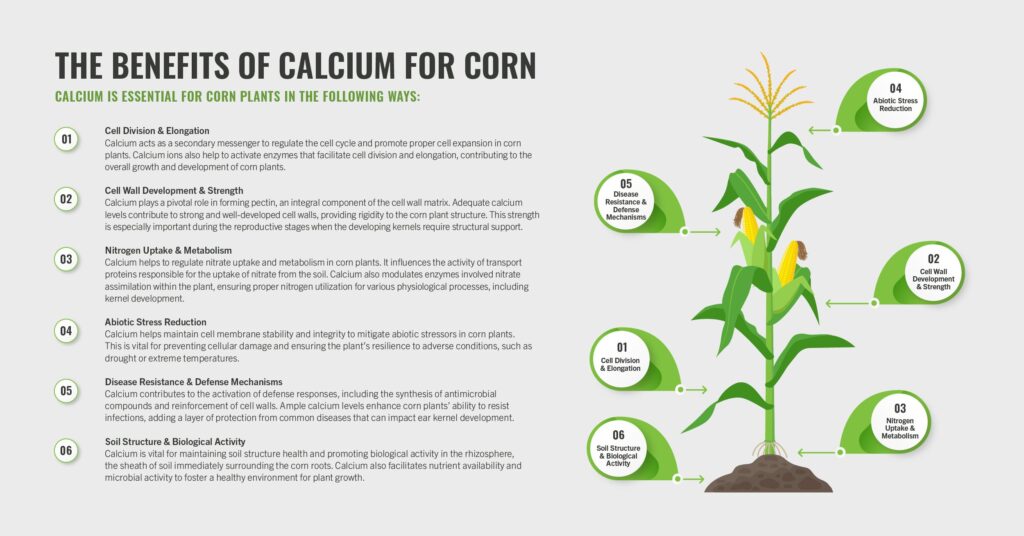
    Calcium is an important nutrient for proper corn plant nutrition. Even though it is a secondary nutrient, calcium is critical for optimizing plant strength, ear and kernel development and plays a key role in numerous physiological processes throughout the plant.   

    More specifically, calcium supports corn plants in the following ways:

    Cell Division & Elongation:
    Calcium acts as a secondary messenger to regulate the cell cycle and promote proper cell expansion in corn plants. Calcium ions also help to activate enzymes that facilitate cell division and elongation, contributing to the overall growth and development of corn plants.

    Cell Wall Development & Strength:
    Calcium plays a pivotal role in forming pectin, an integral component of the cell wall matrix. Adequate calcium levels contribute to strong and well-developed cell walls, providing rigidity to the corn plant structure. This strength is especially important during the reproductive stages when the developing kernels require structural support.  

    Nitrogen Uptake & Metabolism:
    Calcium helps to regulate nitrate uptake and metabolism in corn plants. It influences the activity of transport proteins responsible for the uptake of nitrate from the soil. Calcium also modulates enzymes involved in nitrate assimilation within the plant, ensuring proper nitrogen utilization for various physiological processes, including ear kernel development.  

    Abiotic Stress Reduction:
    Calcium helps maintain cell membrane stability and integrity to mitigate abiotic stressors in corn plants. This is vital for preventing cellular damage and ensuring the plant’s resilience to adverse conditions, such as drought or extreme temperatures. 

    Disease Resistance & Defense Mechanisms:
    Calcium contributes to the activation of defense responses, including the synthesis of antimicrobial compounds and reinforcement of cell walls. Ample calcium levels enhance corn plants’ ability to resist infections, adding a layer of protection from common diseases that can impact kernel development.  

    Soil Structure & Biological Activity:
    Calcium is vital for maintaining soil structure health and promoting biological activity in the rhizosphere, the sheath of soil immediately surrounding the corn roots. Calcium also facilitates nutrient availability and microbial activity to foster a healthy environment for plant growth.  

    Overall, calcium is integral to the overall health and productivity of corn crops. Understanding the multifaceted role calcium plays in corn production is essential for enabling optimal growth and development. With soil-stable, readily available sulfur and calcium, SUL4R-PLUS® calcium-sulfate is an excellent option for helping corn plants meet their calcium and sulfur requirements for optimal crop growth and robust yields.  

    Get expert insights, company news & trial data.

    Here’s a few similar resources we think you may find interesting.

    • SUL4R-PLUS Sustainability: The Carbon Footprint of Commonly Used Fertilizers

      SUL4R-PLUS Sustainability: The Carbon Footprint of Commonly Used Fertilizers Travis Banet, PhD (Integrated Plant and Soil Sciences)SUL4R-PLUS Manager of Research and Development In 2025, SUL4R-PLUS partnered with Tunley Environmental to measure SUL4R-PLUS carbon footprint. What is a carbon footprint? Greenhouse gas emissions are commonly created when fuel and energy are used to power things. For …

      Read More
    • Improve Soil Health & Crop Yields With Low Salt Fertilizer: See the Field Trial Results

      Fertilizer is an essential component of modern agriculture, providing the essential nutrients for plants to grow and thrive. However, not all fertilizers are created equal, and some can have negative impacts on soil and crop health. One factor that is often overlooked when selecting a fertilizer is its salt index, or the potential any fertilizer has to harm a crop. Excessive salt levels can lead to soil compaction, reduced water penetration, decreased plant growth, increase susceptibility to insects and disease, and reduced yields.

      Read More
    • Latest Corn Field Trials Show Strong Cost Savings

      We recently completed a field trial on corn  coordinated with Meyer Farms of Addieville, Illinois and the results are in! This trial compared the  yields using our patented SUL4R-PLUS product and the grower standard N-P-K fertility treatment with varied reductions in the amount of nitrogen applied. So how did it work out?

      Read More

    Calcium Clarified: Alfalfa

    Calcium is a vital nutrient that helps facilitate proper growth and function of alfalfa plants. From regulating cell division and cell wall development to facilitating nutrient uptake and metabolism, calcium is required for numerous physiological processes.

    More specifically, calcium supports alfalfa plants in the following ways:

    Crown Establishment & Early Growth:
    In the early stage of crown establishment, calcium ions support cell cycle-regulating enzymes, ensuring precision control of the plant’s cell division process. This regulation is crucial for the formation of growth tissues in the crown, which serve as reservoirs for growth cells waiting for further division and elongation. 

    Cell Wall Development & Strength:
    Calcium is an essential component of cell walls within all stem and leaf tissue. It is also an essential ingredient for the formation and maintenance of strong and rigid cell walls. This helps protect plants from stress and pest damage and allows them to support their own weight under rigorous growth between cuttings.  

    Nitrogen Uptake & Metabolism:
    Calcium influences the transport proteins which influence the uptake of nitrate from the soil. Calcium also modulates enzymes involved in nitrate assimilation within the plant, ensuring proper nitrogen utilization for various physiological development and growth processes 

    Abiotic Stress Reduction:
    Calcium helps maintain cell membrane stability and integrity during periods of environmental stress, such as drought or extreme temperature fluctuations. Calcium is vital for preventing cellular damage during these events and ensures the plant’s growth and resilience during and after adverse stress conditions.  

    Disease Resistance & Defense Mechanisms:
    Calcium contributes to the activation of defense responses in alfalfa plants. Adequate calcium levels enhance the plant’s ability to resist infections and protect plants from common diseases because the surface of the plant tissues is more resilient with stronger cell walls.

    Overall, understanding and managing calcium levels is crucial to enabling the optimal growth, development and resilience of alfalfa. With 100% plant-available nutrition, SUL4R-PLUS® calcium-sulfate is an excellent option for helping alfalfa plants meet their calcium and sulfur requirements for optimal crop growth and yield.   

    Get expert insights, company news & trial data.

    Here’s a few similar resources we think you may find interesting.

    • Gaining Ground SUL4R-PLUS: Fertilizer You Can Rely on Reliable Nutrients During Unpredictable Times

      Optimal crop nutrition is more than just N, P and K. Secondary nutrients, like calcium, are often overlooked, but actually serve important roles in crop production.

      Read More
    • Trials Continue to Show Improved Yields by Adding SUL4R-PLUS

      The results are in from our 2022 corn field trials conducted in Western Kentucky! These trials demonstrated that SUL4R-PLUS can improve corn yields while also increasing nitrogen uptake efficiency and utilization by the crop. Let’s dig into the details.

      Read More
    • How to Boost Wheat Yield with SUL4R-PLUS

      With fertilizer prices increasing, it’s more important than ever that you make the right choice. That means giving your crop everything they need to thrive.

      Read More

    Breaking Ground on New Opportunities for SUL4R-PLUS & Marissa, IL

    We’re excited to announce that SUL4R-PLUS is coming to Marissa, IL! The new plant location will reside on 34 acres of the former Quad County Ready Mix concrete plant near the Prairie State power plant at 655 Washington County Line Road. Our goal with this expansion is to help meet growing sales needs and increase product availability to better support our growers.

    We’re also excited to be able to better support the community and the environment through this expansion. SUL4R-PLUS is manufactured using the gypsum by-product from nearby coal burning power plants and turning it into a product that is extremely beneficial to soil health.

    Construction is already under way. The Marissa plant is scheduled to be operational by February 2025.

    With operational expansion comes team expansion. This summer kicks off our search for the newest additions to the SUL4R-PLUS team. We take pride in making farming a little easier and lot more rewarding for our customers. If one of the following positions seems like the right fit, we’d love to be in touch.

    Positions we’re looking to fill:

    • Production Manager
    • Maintenance Supervisor
    • Quality Control & Process Engineer
    • Plant Operators
    • Shift Supervisors
    • Equipment Operators (Front-End Loader Operators, Skid Steer Operators, Forklift Operators)

    All full-time SUL4R-PLUS team members can expect a competitive salary and benefit package, including medical and dental coverage, performance bonus opportunities and a 401k match.

    Applicants will be subject to background checks and drug screening.

    Interested in joining us in Marissa, IL? Please complete the form below.

    Calcium Clarified: The Basics

    Optimal crop nutrition is more than just N, P and K. Secondary nutrients, like calcium, are often overlooked, but actually serve important roles in crop production. From supporting plant cell structure, early root growth and leaf development to regulating nutrient uptake and movement throughout the plant, calcium plays a significant role in crop growth and yield. 

    Generally, calcium supports the plant in the following areas:  

    Cell Division & Elongation:
    Calcium acts as a secondary messenger to regulate the cell cycle and promote proper cell expansion. Calcium ions help activate enzymes that facilitate cell division and elongation, contributing to the overall growth and development of the plant.

    Cell Wall Elongation & Strength:
    Calcium is important for the formation of pectin, a component of the cell wall matrix. Adequate calcium levels contribute to strong and well-developed cell walls, providing rigidity to the plant stem, branch, and leaf structure.

    Nitrogen Uptake & Metabolism:
    Calcium influences the activity of transport proteins for the uptake of nitrate from the soil. Calcium also modulates enzymes involved in nitrate assimilation within the plant, ensuring proper nitrogen utilization for various physiological processes.

    Abiotic Stress Management:
    Calcium helps maintain cell membrane stability and integrity during periods of environmental stress, such as drought or extreme temperatures. Calcium is vital for preventing cellular damage and ensuring the plant’s resilience to adverse conditions.

    Disease Resistance & Defense Mechanisms:
    Calcium contributes to the activation of defense responses in the plant, including the synthesis of antimicrobial compounds and reinforcement of cell walls. Adequate calcium levels enhance the plant’s ability to resist infections and protect plants from common diseases because the surface of the plant tissues are more resilient with stronger cell walls.

    Soil Structure Health & Biological Activity:
    Calcium is vital for maintaining soil structure health and promoting biological activity in the rhizosphere, the region of soil engaged by the plant’s roots. Calcium also facilitates nutrient availability and microbial activity to foster a healthy environment for plant growth.

    Calcium Availability

    Today’s high-yielding crops require more calcium than ever before. Even when soil tests indicate high calcium levels, it does not guarantee optimal plant availability for the critical nutrient. Generally, less than 5% of measured calcium shown on traditional soil test results  is plant-available.  

    The availability of calcium for plants to uptake in soils can be influenced by interactions with soil colloids, the presence of other nutrient ions and soil pH. Therefore, regular soil and plant tissue testing and consideration of the soil chemistry dynamics are essential for tailoring calcium management strategies and optimizing plant nutrition.  

    Supplemental Calcium 

    Supplemental calcium nutrient sources vary in plant availability. Therefore, in many cases, it is critical to apply calcium products that are more plant-available and can address plant uptake needs during critical growth and development periods. By choosing calcium sources that are readily absorbed by plants, growers can help maximize uptake and deliver elevated returns on their fertilizer investment. With 100% plant-available nutrition, SUL4R-PLUS® calcium-sulfate is an excellent option for helping crops meet their calcium needs (and it helps improve the soil too).   

    Overall, calcium is important for supporting plant growth and development and ensuring robust yields across most crops. Stay tuned for future blog posts in our Calcium Clarified series where we will break down the role of calcium in specific crops including alfalfa, corn, potatoes, soybeans and wheat.  

    Get expert insights, company news & trial data.

    Here’s a few similar resources we think you may find interesting.

    • Trials Continue to Show Improved Yields by Adding SUL4R-PLUS

      The results are in from our 2022 corn field trials conducted in Western Kentucky! These trials demonstrated that SUL4R-PLUS can improve corn yields while also increasing nitrogen uptake efficiency and utilization by the crop. Let’s dig into the details.

      Read More
    • When You Neglect Calcium, You’re Neglecting Your Crops

      Calcium is an important nutrient for proper corn plant nutrition. Even though it is a secondary nutrient, calcium is critical for optimizing plant strength, ear and kernel development and plays a key role in numerous physiological processes throughout the plant.

      Read More
    • Don’t Lose Young Crops to Salt Burn

      Virtually all fertilizer materials are salts. And while fertilizer can make an enormous, positive difference in the quality of your crops, it can also sometimes cause salt burn.

      Read More

    SUL4R-PLUS and HELM Crop Nutrition Americas Announce Exclusive Partnership

    We are thrilled to announce our exclusive partnership with HELM Crop Nutrition Americas, a leading name in agricultural logistics and distribution. This collaboration represents a significant step forward for SUL4R-PLUS, as it ensures that our high-quality, granular calcium-sulfate fertilizer will be efficiently delivered to farmers across North America. With HELM’s expertise and extensive network, we are confident that this partnership will not only expand the availability of SUL4R-PLUS but also strengthen our commitment to providing crop nutrition solutions that raise the bar for agricultural excellence.