When You Neglect Calcium, You’re Neglecting Your Crops

You probably already know that calcium is an important factor in your crops’ health. It’s one of the most basic elements required for strong plants, and can help with:

  • Proper cell division and elongation
  • Proper cell wall development
  • Nitrate uptake and metabolism
  • Improved soil structure and biologicals
  • Protection from stress and disease

When we put this assumption to the test, we found that the key issue is not the presence of calcium, but the crops’ ability to use the calcium. Calcium is not mobile in the plant, so any new growth will need new calcium to grow strong and healthy—it cannot pull existing calcium from older parts of the plant. 

The best way to deal with this issue is to use a fertilizer that can continue to release nutrients over time. When we created SUL4R-PLUS fertilizer, providing nutrients when and where they are needed was one of our primary goals. Now, with our patented formula, SUL4R-PLUS fertilizer can provide calcium to your crops throughout the growing season, resulting in stronger plants and higher yields.
Get expert insights, company news & trial data.

Here’s a few similar resources we think you may find interesting.
  • Join a Growing SUL4R-PLUS Team

    As the quest for higher-yielding soybeans advances, balanced fertility will be required to push yields higher. Proper crop nutrition goes beyond the macronutrients of nitrogen (N), phosphorus (P) and potassium (K).

    Read More
  • The Top 3 Nutrients Missing from Your Soil Test

    Soil testing can be expensive, and if you’re not sure what kind of testing is most valuable to you, it’s tempting to just choose the most affordable option.

    Read More
  • Calcium Clarified: The Basics

    Optimal crop nutrition is more than just N, P and K. Secondary nutrients, like calcium, are often overlooked, but actually serve important roles in crop production.

    Read More

Get the Most Out of Your Fertilizer with SUL4R-PLUS

Fertilizer prices are rising, and that makes your decision of which to buy even more important. It’s imperative that your investment give you the highest yields possible and improved nutrient efficiency, which is why you’ll be interested to hear that SUL4R-PLUS fertilizer field trials the past several years demonstrates improved nutrient uptake of primary, secondary and micronutrients resulting in optimal plant health and dramatic yield increases.

Particularly exciting is that SUL4R-PLUS fertilizer isn’t crop specific, it provides calcium, sulfate, and some fulvic acid, nutrients that most every crop need, so no matter what you’re growing, you can expect to see increased yields. Don’t take our word for it though, see the data for yourself in this summary presentation . Our research shows that the use of SUL4R-PLUS fertilizer increases yield, improves quality of crops, increases nutrient uptake, and generates more revenue on the acre. 

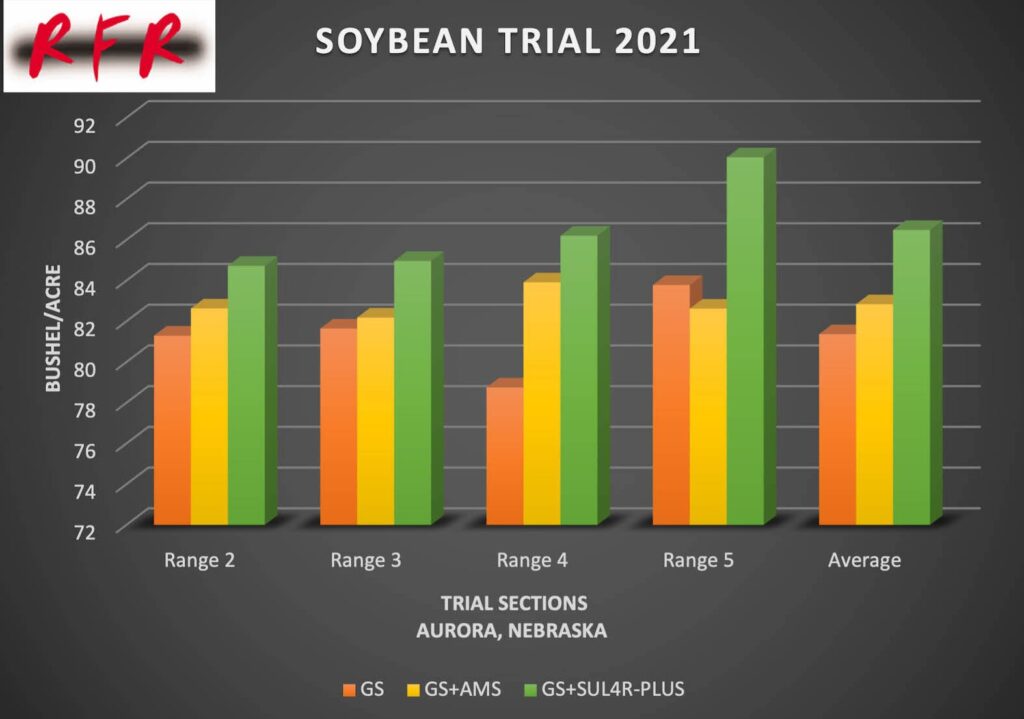
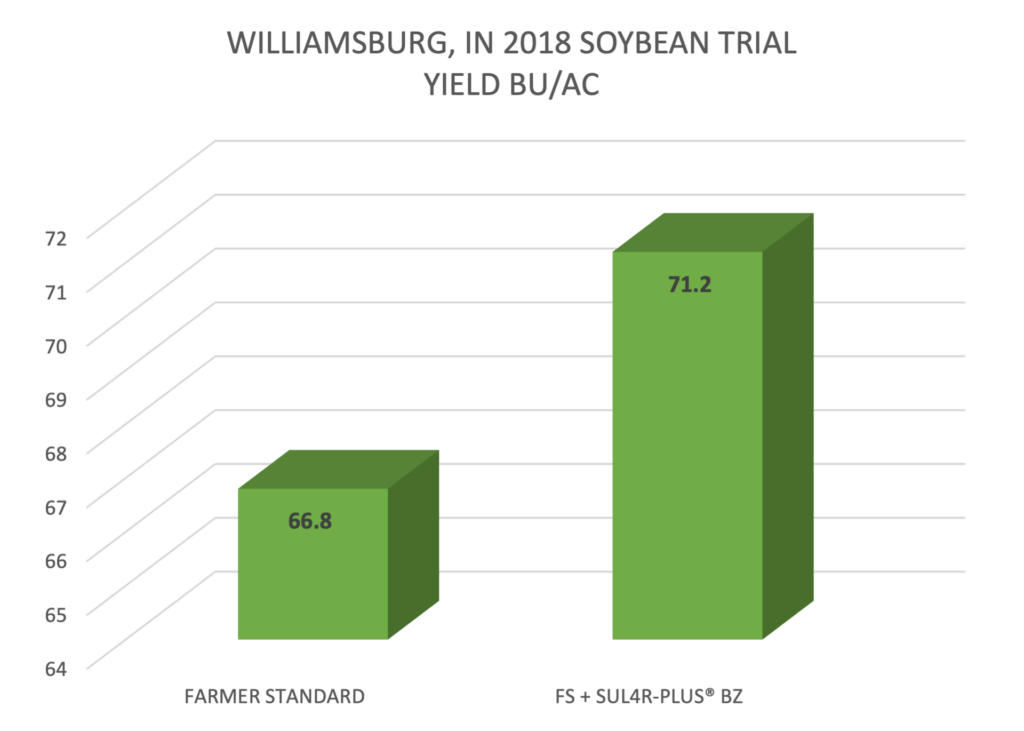
In a 2021 soybean trial in Nebraska, SUL4R-PLUS fertilizer showed an average yield advantage of 3.65 bu/acre above AMS and 5.12 bu/acre over Grower Standard. It’s also more affordable per acre than AMS, giving you more bang for your buck. For even higher yields, try SUL4R-PLUS B+Z, which supplies additional nutrients to your crop making them stronger and healthier. With the addition of calcium, sulfur, boron and zinc, a 2018 soybean trial in Williamsburg IN found increased yield and gross revenue per acre versus the grower standard.

DATETREATMENTCA%S%B PPMZN PPM
6/25/2018CK-FS0.990.273625
6/25/20181.050.34331
8/20/2018CK-FS2.50.234433
8/20/2018FS+SUL4R-PLUS BZ2.810.214343
TREATMENTYIELD BUSHELS/ACREGROSS $/AC @ $9.00/BUGROSS $/AC DIFFERENCE
Farmer Standard66.8$601.20
FS+SUL4R-PLUS BZ71.2$640.80

While you consider your fertilizer options over this winter, keep in mind what the science says. SUL4R-PLUS fertilizer is a reliable choice for securing higher yields. And as always, SUL4R-PLUS fertilizer has the additional benefits of being a homogeneous granule, superior spread, fulvic acid, low salt, dust free application and ease of use. To learn more, visit https://www.sul4r-plus.com/.

Get expert insights, company news & trial data.

Here’s a few similar resources we think you may find interesting.

  • Reduce Fertilizer Dust, Increase Workplace Sustainability

    Calcium is an important nutrient for proper corn plant nutrition. Even though it is a secondary nutrient, calcium is critical for optimizing plant strength, ear and kernel development and plays a key role in numerous physiological processes throughout the plant.

    Read More
  • Don’t Lose Young Crops to Salt Burn

    Virtually all fertilizer materials are salts. And while fertilizer can make an enormous, positive difference in the quality of your crops, it can also sometimes cause salt burn.

    Read More
  • Improve Soil Health & Crop Yields With Low Salt Fertilizer: See the Field Trial Results

    Fertilizer is an essential component of modern agriculture, providing the essential nutrients for plants to grow and thrive. However, not all fertilizers are created equal, and some can have negative impacts on soil and crop health. One factor that is often overlooked when selecting a fertilizer is its salt index, or the potential any fertilizer has to harm a crop. Excessive salt levels can lead to soil compaction, reduced water penetration, decreased plant growth, increase susceptibility to insects and disease, and reduced yields.

    Read More

Don’t Lose Young Crops to Salt Burn

Virtually all fertilizer materials are salts. And while fertilizer can make an enormous, positive difference in the quality of your crops, it can also sometimes cause salt burn.

Salt burn is what happens when the concentration of salt in the soil is so high, the water content of your crops’ cells flows out of the plant and into the soil. It’s a natural reaction to unbalanced salt levels and can unfortunately damage or even kill your plants. One way to avoid this problem is choosing a fertilizer with a low salt index number. 

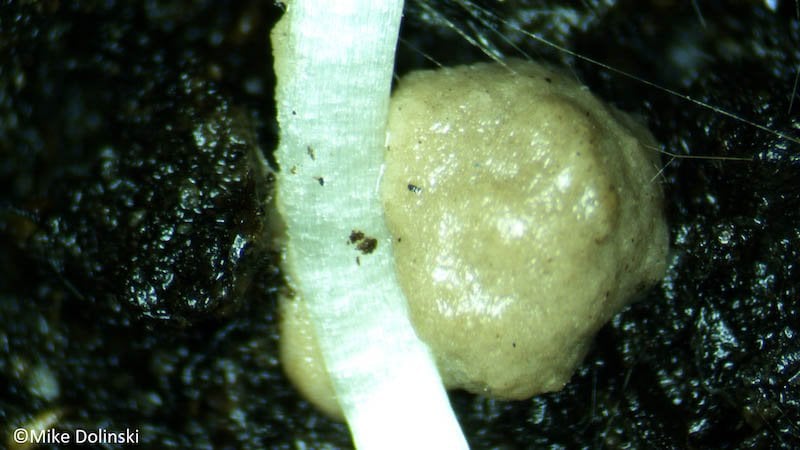
Damaged root with SUL4R-PLUS

Fertilizer salt index is a measurement of the salt concentration induced in a soil solution. Continuous fertilizing with high salt fertilizer products causes the soil solution to become salty, which extracts the available water from the soil solution, thus robbing roots of valuable moisture. Values range from 1 to 100, with 100 being pure sodium nitrate. The higher the number, the more likely a fertilizer is to burn your crops. This makes it easy to understand, since the number is directly tied to the potential for damage.

Seedlings are particularly vulnerable to salt burn. Since they have a higher water content than more mature plants, they are more likely to lose that essential water to soil with a high salt index. When you choose a fertilizer with a low salt index, your soil is better able to offer seedlings the minerals and nutrients they need to thrive without causing salt burn.

While you’re considering fertilizer for your fall fill, remember to check the salt index. SUL4R-PLUS fertilizer has a salt index number ranging from 5 to 8, which is unlikely to cause salt burn. This compares to a salt index number in the 70s and 80s for nitrogen- and ammonium-based fertilizers.

To learn more about salt index and salt burn, check out our Salt Index and Fertilizer Burn fact sheet.

These drone pictures show sulfur-deficient corn in a field trial near Franklin, IN. The producer applied strips at three different rates of SUL4R-PLUS fertilizer (left to right: 100 lb/a, 150 lb/a, and 200 lb/a). By increasing their sulfate rates during their season, they saw an increase in yield and overall crop health.

SUL4R-PLUS fertilizer provides a continuous source of plant-available sulfate and calcium throughout the growing season. Some other sources/forms of sulfate or sulfur become unavailable over time, or, in some cases, are never available to the crop at all. Having plant-available calcium and sulfate available throughout the growing season also means you will optimize the uptake of other critical nutrients, including nitrogen, phosphates, potassium, and magnesium.

Get expert insights, company news & trial data.

Here’s a few similar resources we think you may find interesting.

  • Gaining Ground SUL4R-PLUS: Fertilizer You Can Rely on Reliable Nutrients During Unpredictable Times

    Optimal crop nutrition is more than just N, P and K. Secondary nutrients, like calcium, are often overlooked, but actually serve important roles in crop production.

    Read More
  • SUL4R-PLUS is the Investment You Need

    Fertilizer is more than just a cost, it’s an investment. When you take into account inflation, supply chain issues, and overall commodity shortages, every penny counts.

    Read More
  • Reduce Fertilizer Dust, Increase Workplace Sustainability

    Calcium is an important nutrient for proper corn plant nutrition. Even though it is a secondary nutrient, calcium is critical for optimizing plant strength, ear and kernel development and plays a key role in numerous physiological processes throughout the plant.

    Read More

Don’t Lose Young Crops to Salt Burn

Virtually all fertilizer materials are salts. And while fertilizer can make an enormous, positive difference in the quality of your crops, it can also sometimes cause salt burn.

Salt burn is what happens when the concentration of salt in the soil is so high, the water content of your crops’ cells flows out of the plant and into the soil. It’s a natural reaction to unbalanced salt levels and can unfortunately damage or even kill your plants. One way to avoid this problem is choosing a fertilizer with a low salt index number. 

Damaged root with SUL4R-PLUS

Damaged root with SUL4R-PLUS

Fertilizer salt index is a measurement of the salt concentration induced in a soil solution. Continuous fertilizing with high salt fertilizer products causes the soil solution to become salty, which extracts the available water from the soil solution, thus robbing roots of valuable moisture. Values range from 1 to 100, with 100 being pure sodium nitrate. The higher the number, the more likely a fertilizer is to burn your crops. This makes it easy to understand, since the number is directly tied to the potential for damage.

Seedlings are particularly vulnerable to salt burn. Since they have a higher water content than more mature plants, they are more likely to lose that essential water to soil with a high salt index. When you choose a fertilizer with a low salt index, your soil is better able to offer seedlings the minerals and nutrients they need to thrive without causing salt burn.

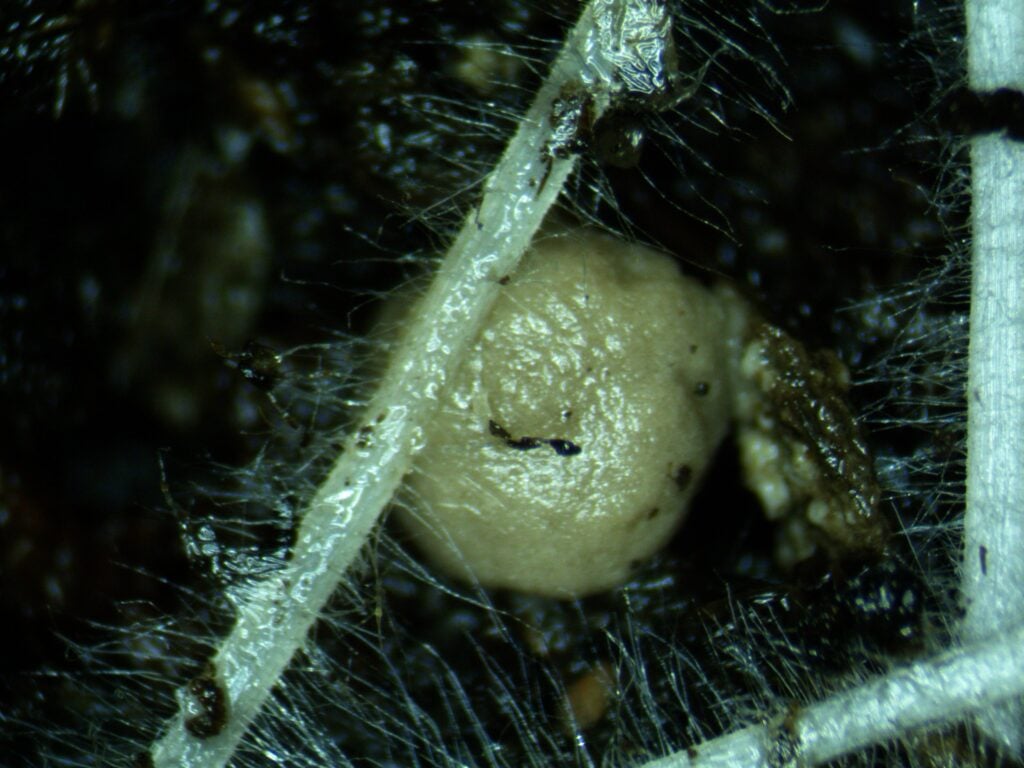
Undamaged root with SUL4R-PLUS

Undamaged root with SUL4R-PLUS

While you’re considering fertilizer for your fall fill, remember to check the salt index. SUL4R-PLUS fertilizer has a salt index number ranging from 5 to 8, which is unlikely to cause salt burn. This compares to a salt index number in the 70s and 80s for nitrogen- and ammonium-based fertilizers.

To learn more about salt index and salt burn, check out our Salt Index and Fertilizer Burn fact sheet.

These drone pictures show sulfur-deficient corn in a field trial near Franklin, IN. The producer applied strips at three different rates of SUL4R-PLUS fertilizer (left to right: 100 lb/a, 150 lb/a, and 200 lb/a). By increasing their sulfate rates during their season, they saw an increase in yield and overall crop health.

SUL4R-PLUS fertilizer provides a continuous source of plant-available sulfate and calcium throughout the growing season. Some other sources/forms of sulfate or sulfur become unavailable over time, or, in some cases, are never available to the crop at all. Having plant-available calcium and sulfate available throughout the growing season also means you will optimize the uptake of other critical nutrients, including nitrogen, phosphates, potassium, and magnesium.

The Top 3 Nutrients Missing from Your Soil Test

It’s that time of year again—soil testing time. We know that soil testing can feel like a hassle sometimes. It can be expensive, and if you’re not sure what kind of testing is most valuable to you, it’s tempting to just choose the most affordable option.

Unfortunately, choosing to minimize your testing to save money can cost you in the long run. There are a lot of unpredictable forces affecting your farm—weather, market prices, policy—but comprehensive soil and tissue testing are tools available help reduce uncertainty. Only once you know what nutrients are available or missing from your soil and crop tissues, you can take informed steps to help your crops grow.

Of course, three of the most important nutrients your crops need to thrive are calcium, sulfur, and nitrogen. Despite their importance, some basic soil testing strategies neglect to measure them. These essential nutrients also contain another complexity: they are easily lost or not available in certain soil conditions, so the amount in the soil is not necessarily the amount that will be available to your crops when they need it. What matters most is the balance available in the soil and plant tissue as the demand for these nutrients changes through the growing season.

It’s critical to have the appropriate ratio of sulfur to nitrogen, as well as magnesium to calcium, in the plant. Depending on soil conditions, these nutrients can easily be lost or unavailable, either through leaching out with moisture throughout the season or due to imbalanced ratios.

These drone pictures show sulfur-deficient corn in a field trial near Franklin, IN. The producer applied strips at three different rates of SUL4R-PLUS fertilizer (left to right: 100 lb/a, 150 lb/a, and 200 lb/a). By increasing their sulfate rates during their season, they saw an increase in yield and overall crop health.

SUL4R-PLUS fertilizer provides a continuous source of plant-available sulfate and calcium throughout the growing season. Some other sources/forms of sulfate or sulfur become unavailable over time, or, in some cases, are never available to the crop at all. Having plant-available calcium and sulfate available throughout the growing season also means you will optimize the uptake of other critical nutrients, including nitrogen, phosphates, potassium, and magnesium.

Get expert insights, company news & trial data.

Here’s a few similar resources we think you may find interesting.

  • Get the Most Out of Your Fertilizer with SUL4R-PLUS

    Fertilizer prices are rising, and that makes your decision of which to buy even more important.

    Read More
  • The Top 3 Nutrients Missing from Your Soil Test

    Soil testing can be expensive, and if you’re not sure what kind of testing is most valuable to you, it’s tempting to just choose the most affordable option.

    Read More
  • New Year, New Video Launch

    To kick the new year off right, we’re launching a brand-new video to showcase what we do best: making farming a little easier and whole lot more rewarding. Watch it now.

    Read More